


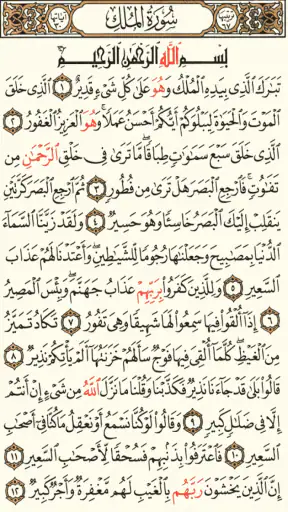
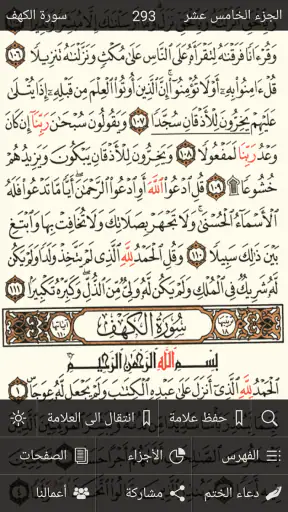



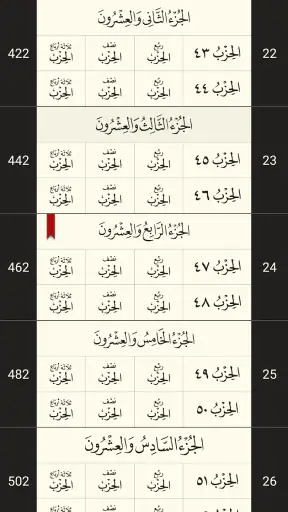


I approached القرآن الكريم كامل بدون انترنت as a practical reading app rather than as a feature-packed digital library. Its purpose is clear: keep the complete Holy Quran available for reading, along with research material and the supplication of the seal, without requiring an internet connection. That focused design makes it especially appealing when I want a dependable Quran reader instead of a broader app filled with unrelated tools.
The app belongs to the Books & Reference category and is developed by simppro. It is free to use, carries a Teen content rating, and has reached more than 50 million installs. Those figures suggest that it has become a familiar choice for Android users looking for offline Quran access, although popularity alone does not tell me whether it suits every reader. The important question is how well its simple approach fits your daily routine.
What using the app feels like in everyday reading
My first impression is that the offline focus changes the way I think about the app. I do not need to plan around a weak signal, search for a Wi-Fi connection, or worry that a reading session will be interrupted while travelling. If I already have the app installed, the central reading experience is designed around access rather than connectivity. That is its biggest practical advantage.
For a normal reading session, the lack of dependence on the internet should also make opening the Quran feel more immediate than using a website in a mobile browser. A browser may need to load a page, restore a tab, or display advertisements and other page elements before I can begin. Here, the app’s narrow purpose is more convenient: I open a dedicated reference tool and get to the material I installed it for.
I would not describe it as an app for people who want a highly personalized study platform. Its appeal comes from keeping the core content together in one place. The complete Quran, research content, and the supplication of the seal give it more substance than a bare text viewer, but the experience remains centered on reading and reference. That clarity is useful, especially for someone who wants fewer distractions.
The current version is 10.5, and the minimum operating system is Android 6.0. That combination makes the app relevant to many older Android phones as well as newer models. Still, compatibility does not automatically mean every device will feel identical. Screen size, available storage, system age, and background activity can all affect how comfortable an offline reading app feels in practice.
Why offline access matters more than it first appears
The obvious benefit is reading during travel, but I find the more interesting advantage is consistency. A person may use the app in a mosque, on public transport, in a waiting room, or at home with mobile data turned off. In each case, the reading habit is less dependent on network conditions. That makes the app suitable for users who want to keep their phone in a low-connectivity or data-saving mode.
There is also a useful privacy and concentration angle. A web search can lead to many pages, tabs, and interruptions. A dedicated Quran application avoids that browsing detour. I can treat the phone more like a pocket reference book. This does not make the device distraction-free, of course, but it removes one common source of friction.
One practical habit I recommend is opening the app before an important trip or reading session and checking that the material you expect to use is available as intended. Offline-focused apps are most valuable when prepared in advance. I would not wait until I am already without a connection to discover that a particular section or supporting material needs an initial setup step.
The app is also a sensible choice for a family member who is not interested in managing several separate Quran tools. Instead of installing one app for the text, another for research, and a third for a closing supplication, this package keeps the main resources associated with one reading experience. That simplicity can matter more than a long list of advanced options.
Speed expectations on older and newer phones
Because the app is centered on stored reading material rather than a constantly changing online feed, I expect routine navigation to feel relatively direct. Opening a local text normally avoids the waiting associated with downloading each page. On a newer phone, that should make short reading sessions feel straightforward. On an older device, the experience may still depend on how much free memory and storage the phone has available.
I am careful not to confuse a simple interface with unlimited speed. A phone that is nearly full, running many background tasks, or using an older version of Android can make any app feel less responsive. The app’s offline nature reduces one source of delay, but it cannot remove system-level slowdowns. If pages take longer to appear, I would first check the phone itself rather than assume the Quran content is the problem.
For quick reference, the app’s focused structure is an advantage. I can open it with a specific intention instead of passing through a news feed or a large catalog. For extended reading, the more important performance question is not only how quickly the first page appears, but whether navigation remains comfortable over time. A good offline reader should let me continue without repeatedly waiting for network requests, and that is the role this app is best positioned to fill.
There is a trade-off here. Online Quran services may offer richer live search, synchronized accounts, or changing supplementary material, but those benefits can come with loading delays and a greater dependence on a stable connection. This app gives up some of that connected flexibility in exchange for a more self-contained reading experience. For me, that is a worthwhile exchange when access and continuity matter more than cloud-based extras.
What happens during heavier use
Light use is easy to imagine: open the app, locate a passage, read, and close it. Heavier use is different. It may involve moving through many pages, switching between Quran reading and the included research, or keeping the app open during a long study period. Those moments reveal whether the app is merely convenient for short checks or dependable as a regular reference.
The offline design should help during long sessions because the reading material is not being repeatedly fetched from a remote server. That can be particularly useful when I am in a place with unstable coverage. Instead of watching a page reload whenever the signal changes, I can stay focused on the text. This is one of the strongest arguments for choosing a dedicated offline app over a mobile website.
At the same time, long sessions expose the limitations of a phone as a reading device. A small display may make sustained reading less comfortable than a printed Quran or a larger tablet. Brightness, font presentation, and the way the text fits the screen can matter more after twenty minutes than they do during a quick lookup. I would test the reading comfort on my own phone before making it my only Quran resource.
Another realistic heavy-use situation is switching rapidly between sections while preparing a lesson or checking a reference. Here, the app’s bundled research material can be useful because I do not have to leave the application for every related lookup. However, users who need academic search tools, extensive annotation, or a broad collection of commentaries may find that a specialized study platform is better suited to that workload.
My practical advice is to separate two tasks. Use this app for dependable access to the Quran and its included supporting material, then use a more advanced reference tool when you need deeper comparative research. Trying to make one compact offline reader replace every possible Islamic study resource can create unnecessary frustration.
Reliability when the connection disappears
Reliability is where this app makes its clearest case. Its central promise is not tied to having a strong signal, so it fits situations where connectivity is uncertain by nature. Travellers, commuters, students, and readers who intentionally limit mobile data can all benefit from that independence. I especially value it as a backup: even if my usual online service is unavailable, a dedicated local reader can remain useful.
There is a difference between offline availability and general reliability, though. The operating system can still close an app under pressure, an older phone can behave unpredictably, and an update or device change can alter how an application feels. I would keep the app installed and open it occasionally rather than assuming that a tool I have not touched for months will be ready at the exact moment I need it.
A simple recovery routine helps. If the app stops responding, I would close it, reopen it, and check whether other apps are consuming the phone’s resources. Restarting the device can also clear temporary system congestion. These are ordinary Android recovery steps, but they matter more for an offline reference app because I may be relying on it in a place where downloading an alternative is not possible.
The app’s large user base and average rating of 4.1 indicate that many people find it useful, while the roughly 3,700 reviews show that users have actively shared their experiences. I treat those numbers as context rather than a guarantee. A rating cannot predict how the text will look on my screen, how comfortable the navigation will be for my reading style, or how well an older phone will handle the application.
One point I would consider before depending on it exclusively is update discipline. The release date is September 29, 2014, which shows that this is an established app rather than a brand-new experiment. Its current version is 10.5, so it has continued as a maintained product, but I would still keep my expectations realistic: an established offline reader may prioritize dependable core access over the newest connected features found in newer alternatives.
Device limits, storage, and reading comfort
Android 6.0 support is helpful for people using older hardware, but older hardware often has practical constraints. A phone with limited free space may not be the ideal place for any substantial offline library. Before installing, I would check available storage and remove unused downloads if the device is crowded. This is not a criticism unique to the app; it is simply part of maintaining an offline resource.
Battery use is another consideration, although reading a stored text should generally be less demanding than streaming audio or constantly loading web pages. The main drain during a long session is more likely to come from the screen than from the act of displaying text. Lowering brightness and using a comfortable display setting can make a longer reading period easier on both the battery and the eyes.
Older phones may also have slower touch response or less comfortable screen proportions. On a compact display, page movement can feel cramped, while on a larger phone the same material may be easier to follow. I would not judge the app solely by screenshots or by another person’s experience. The most important test is whether I can read without repeatedly zooming, losing my place, or fighting the interface.
The Teen content rating is worth noting for households that manage app access for younger users. It does not change the app’s purpose as a Quran reference tool, but parents and guardians may still want to review the application themselves and decide whether its presentation fits the family’s preferences. The rating is one part of that decision, not a substitute for personal judgment.
For someone using iOS, this particular listing is not the choice I would begin with, since the stated minimum operating system is Android 6.0 and the app is presented as an Android application. I would look for an iPhone alternative with the same priorities: complete offline text, clear navigation, and the specific supporting material I want. The important lesson is not to assume that an Android-focused app will transfer directly to another platform.
Where it beats the usual alternatives
Compared with reading the Quran through a browser, this app wins on focus and independence. A browser is flexible and can expose me to many translations, commentaries, and search tools, but it also depends more heavily on connectivity and can introduce visual clutter. The dedicated app is better when I already know that my main need is a ready-to-open Quran reader.
Compared with a printed Quran, the phone app is more portable and can place the text in my pocket alongside the research and supplication included in the same application. A printed copy may still be preferable for long, distraction-free reading, for people who prefer paper, or for situations where phone use is inappropriate. I see the app as a companion rather than a universal replacement.
Compared with a feature-rich Quran platform, this one may feel less ambitious. Advanced alternatives can be better for audio recitation, detailed bookmarks, synchronized progress, translations, study notes, or broad scholarly resources, depending on what each app offers. The trade-off is that more features can make an app heavier, more complicated, or more dependent on online services. This app’s narrower purpose is its strength when I want simplicity.
A useful workflow is to keep this app as the offline foundation and use another resource only when a specific need arises. For example, I might read from this application during a commute, then consult a separate study tool later when I have a connection and need broader context. That arrangement avoids forcing one app to handle every kind of reading, research, and learning.
Who should use it and who should look elsewhere
I would recommend it to anyone who wants a free Quran reference that remains useful away from the internet. It makes sense for daily readers, travellers, students, and people with inconsistent mobile coverage. It is also a good fit for someone who values an uncluttered purpose and would rather open one dedicated app than search through a browser each time.
I would be more cautious about recommending it as the only app for users who need extensive personalization or advanced study tools. If your routine depends on synchronized reading progress across devices, elaborate notes, multiple scholarly resources, or a highly specialized audio experience, you may prefer a more comprehensive alternative. The app’s simplicity should be seen as a deliberate focus, not as proof that it covers every Quran-related need.
It may also be the wrong choice for readers who strongly prefer printed pages or who find prolonged phone reading tiring. Offline access solves the connection problem, not the ergonomic problem. In that situation, a physical Quran or a larger-screen device could provide a more comfortable main reading experience, with this app kept as a convenient backup.
For a realistic daily scenario, imagine leaving home before sunrise and spending part of the morning travelling through areas with unreliable coverage. I could open the app before boarding, read without using mobile data, return to it during a wait, and use the included research or closing supplication when needed. That is not a dramatic feature demonstration; it is precisely the kind of small, repeated convenience that gives an offline reference app its value.
My final view is positive, with clear boundaries. This is a focused Books & Reference app from simppro that prioritizes access to the complete Quran without an internet connection. Its free price, broad Android compatibility, and established user base make it easy to consider, while its 4.1 average rating suggests a generally favorable reception rather than universal perfection.
The best reason to choose it is dependable offline reading, not a long list of advanced extras. I would install it for travel, backup access, and straightforward daily reading, then pair it with a more specialized tool if my study needs grow. For readers who want a simple Quran resource that is ready when the signal is not, it is a practical recommendation; for those seeking a complete connected study suite, a different option may serve them better.


